All books
discounted
up to 20%
Subjects
|
Historical
Languages
| A truly classical
education has always included a study of ancient or
archaic languages. This page contains a small but
growing collection of books meant to stimulate a
young person's interest in such languages. |
Ages 12 and up
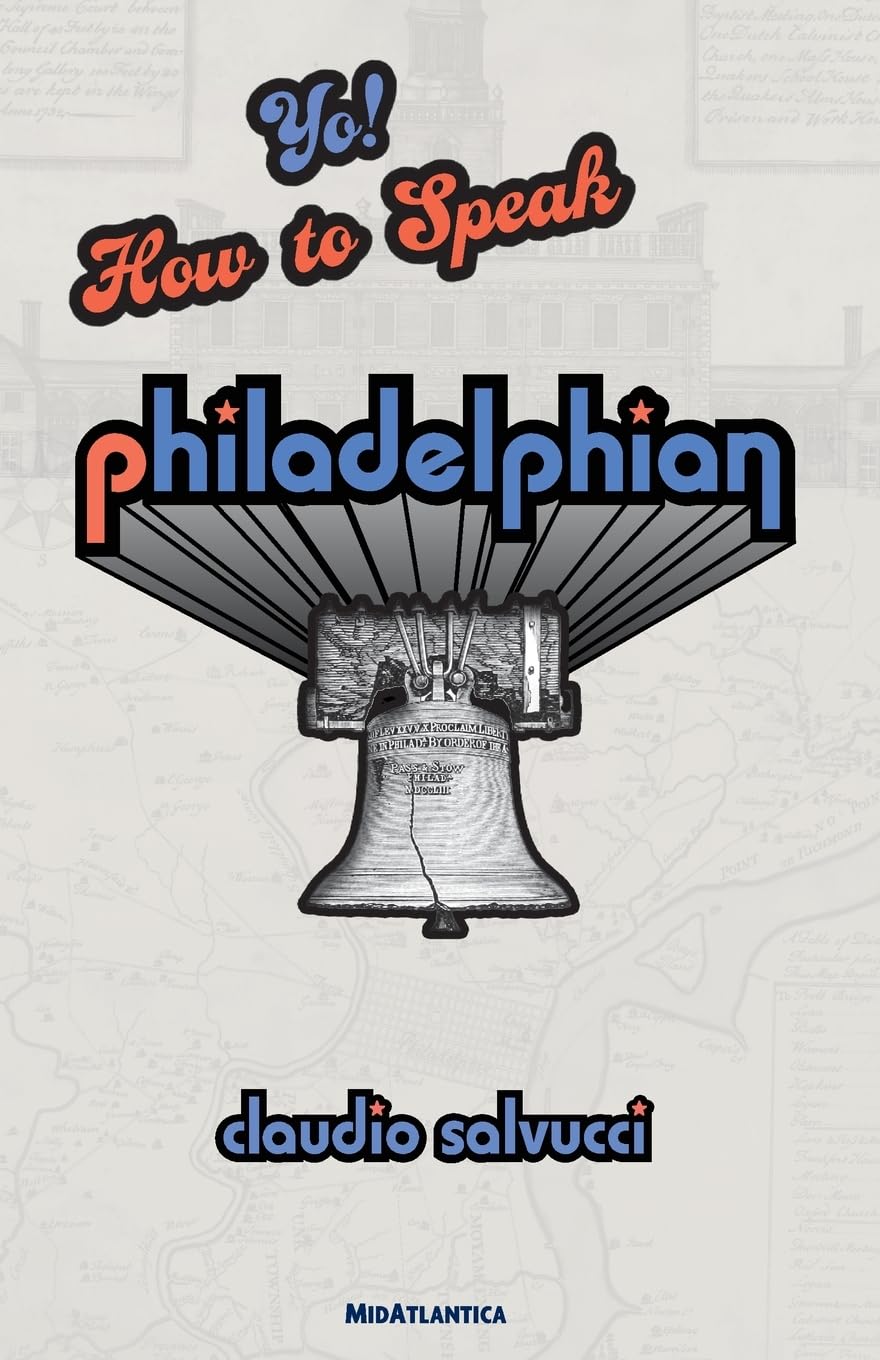
Yo! How to Speak
Philadelphian
by Claudio Salvucci
This
brief, accessible book is a basic guide to the
Philadelphia dialect as featured in movies,
television and, of course, in real life! Meant
for the general public who may not be familiar
with the idiosyncracies of the Philly dialect,
this book will help you learn words and
pronunciations unique to the Philadelphia
region.
From well-known
oddities like "wooder" and "iggles", to
lesser-known sound changes like "shtreet" and
all the complicated rules govern the
Philadelphia short a, you'll learn how
linguists accidentally started fights among
native speakers over word pairs like ferry-furry,
bounce-balance, and mayor-mare.
You'll learn grammatical quirks like positive
"anymore" and "done your homework". And you can
read over two centuries of historical quotes
commenting on and complaining about the way
Philadelphians speak.
Finally, there's a
mini-dictionary that covers everything from old
local terms like squares and baby
coach to more modern Philly-specific terms
like mac machine and jawn.
Paperback ~ 108 pp. ~ $16.95
with 10%
discount, $15.26
|
|
Ages 12 and up
A Book for the
Beginner in Anglo-Saxon
by William Shepard
This
elementary-level
grammar and reader of Anglo-Saxon (also called
Old English, spoken from A.D. 500-1100) is a
digital reprinting of a hard-to-find 1877
publication. Included in this grammar are
extensive verb conjugations and noun and pronoun
declensions, all designed for the beginning
student of the language. Also features almost 30
pages of extracts from the Anglo-Saxon Gospels.
Paperback ~ 95 pp. ~ $19.95
with 20%
discount, $15.96
|

|
Ages 12 and up
First Middle
English Primer
by Henry Sweet
This
elementary handbook in Middle English (spoken
from A.D. 1100-1500), first published in 1884,
was written by one of the premier authorities on
English historical linguistics, Henry Sweet, who
is now widely remembered as the model for the
Henry Higgins character in Shaw's Pygmalion.
This handy manual introduces students to two
slightly different varieties of Middle English.
Part I contains a brief grammar and
representative extracts from the 13th century
Ancren Riwle or "Nuns' Rule" in the southern
dialect. Part II is a brief grammar with
extracts from the Ormulum, a late 12th century
work of poetic homilies of the life of Christ,
in East Midland dialect.
Paperback ~ 96 pp. ~ $19.95
with 20%
discount, $15.96 |

|
For Advanced Students
The Languages of
Classical Antiquity Series (LCA)
Ancient
Mediterranean Europe is best known to us from
Greek and Roman sources, yet the area was also
inhabited by a variety of other tribes and ethnic
groups. Most of these peoples left scarce record
that they ever existed, but history, archaeology
and philology have been able to revive the world's
knowledge of these ancient cultures. We are
pleased to provide, in one series, the fruits of
extensive scholarly labor in these lesser-known
languages. Drawing on evidence from long-buried
inscriptions and papyri, as well as fragments from
literary sources, the LCA series brings together
unique and precious testaments to languages long
since extinct. |
The Languages of Classical Antiquity Series |
For Advanced Students
The American
Language Reprint Series (ALR)
During the early
history of the American nation, a number of
explorers, scholars and missionaries sought to
record the languages of the native peoples they
encountered. As many of the native American tribes
dwindled into extinction, the need became all the
more pressing to preserve their languages for
posterity, and Americans who were keenly anxious
to promote their country's heritage went through
great pains to make sure that the ancient tongues
of the American landscape would not pass into
obscurity unrecorded.
The ALR series was conceived expressly for the
preservation and promotion of these shorter
linguistic records, vocabularies of only a few
hundred entries or less. These vocabularies are
crucial in filling in the vast linguistic gaps
that the larger works leave empty. They cover a
whole host of Eastern Woodlands languages that
were never thoroughly documented, and they are
also particularly useful in preserving regional
dialects and archaic versions of languages that
are otherwise well attested. |

The American Language Reprint Series |
|
